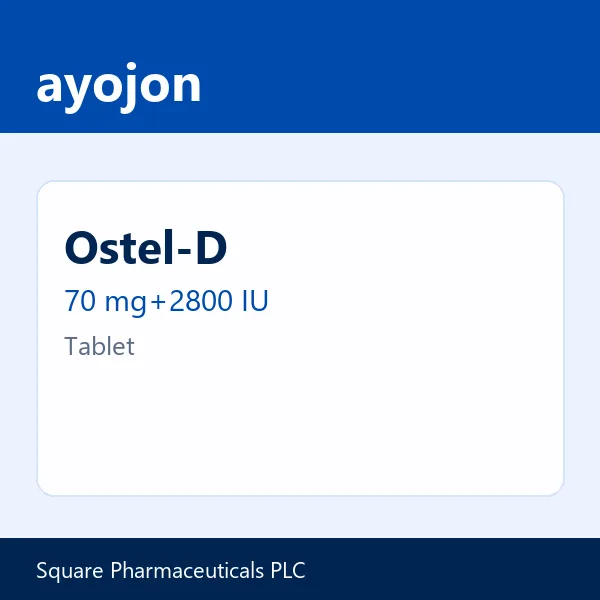


Generic: Alendronic Acid Vitamin D3 | Dosage Form: Tablet | Manufacturer: Square Pharmaceuticals PLC
Indications
Alendronic Acid & Vitamin D3 is indicated in:
- Treatment of osteoporosis in postmenopausal women.
- Treatment of osteoporosis in men.
- Treatment of osteoporosis as it increases the bone mass and reduces the incidence of fractures, including those of the hip and spine.
Dosage & Administration
Treatment of Osteoporosis in Postmenopausal Women: The recommended dosage is-
- 70 mg alendronate and 2800 IU vitamin D3 or
- 70 mg alendronate and 5600 IU vitamin D3 tablet once weekly.
- For most osteoporotic women, the appropriate dose is 70 mg alendronate and 5600 IU vitamin D3 once weekly.
Treatment to Increase Bone Mass in Men with Osteoporosis: The recommended dosage is-
- 70 mg alendronate and 2800 IU vitamin D3 or
- 70 mg alendronate and 5600 IU D3 tablet once weekly.
- For most osteoporotic men, the appropriate dose is 70 mg alendronate and 5600 IU vitamin D3 once weekly.
Interaction
Calcium supplement, antacids and some oral medications will interfere with absorption of Alendronate if taken at the same time. Intravenous ranitidine makes the bioavailability of oral Alendronate double. Incidence of upper gastro-intestinal adverse events associated with NSAID and aspirin appears to be greater with concomitant administration of Alendronate. Mineral oils, orlistat, and bile acid sequestrants (e.g., cholestyramine, colestipol) may impair the absorption of vitamin D. Anticonvulsants, cimetidine, and thiazides may increase the catabolism of vitamin D.
Contraindications
- Abnormalities of the esophagus which delay esophageal emptying, such as stricture or achalasia.
- Inability to stand or sit upright for at least 30 minutes.
- Hypersensitivity to any component of this product.
- Hypocalcaemia.
Side Effects
Usually mild and generally do not require discontinuation of therapy. Side effects include esophageal reactions, abdominal pain and distension, diarrhoea or constipation, flatulence, musculoskeletal pain, headache, rash, erythema and transient decreases in serum calcium and phosphate.
Precautions & Warnings
Hypocalcaemia and other disturbances of mineral metabolism should be corrected before initiation of therapy. Alendronate can cause local irritation of the upper gastro-intestinal mucosa. Caution should be used when Alendronate is given to patients with active upper gastrointestinal problems such as dysphagia, esophageal disease, gastritis, duodenitis or ulcers. Patients should stop taking medicine and consult their physician if they develop esophageal diseases.
Overdose Effects
Hypocalcemia, hypophosphatemia, and upper gastrointestinal adverse events, such as upset stomach, heartburn, esophagitis, gastritis, or ulcer, may result from oral overdosage. Signs and symptoms of vitamin D toxicity include hypercalcemia, hypercalciuria, anorexia, nausea, vomiting, polyuria, polydipsia, weakness, and lethargy.
Therapeutic Class
Combined preparations: Inhibiting bone resorption
Storage Conditions
Store in a cool and dry place. Protect from light & moisture. Keep out of the reach of children.