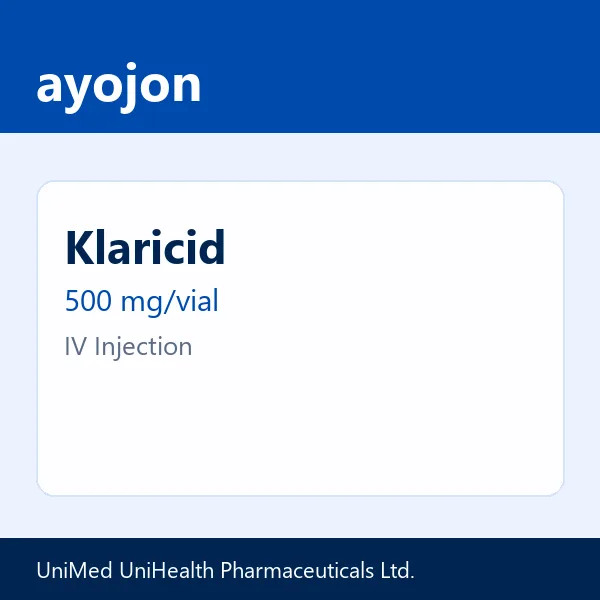


Generic: Clarithromycin | Dosage Form: IV Injection | Manufacturer: UniMed UniHealth Pharmaceuticals Ltd.
Indications
Clarithromycin is indicated for the treatment of-
- Acute bacterial exacerbation of chronic bronchitis in adults
- Acute maxillary sinusitis
- Community-acquired pneumonia
- Pharyngitis or tonsillitis
- Uncomplicated skin and skin structure infections
- Acute otitis media in pediatric patients
- Treatment and prophylaxis of disseminated mycobacterial infections
- Helicobacter pylori infection and duodenal ulcer disease in adults
Dosage & Administration
Adults:
- Acute bacterial exacerbation of chronic bronchitis: 250 mg to 500 mg every 12 hours for 7 to 14 days.
- Acute maxillary sinusitis: 500 mg every 12 hours for 14 days.
- Community-acquired pneumonia: 250 mg every 12 hours for 7 to 14 days.
- Pharyngitis or tonsillitis: 250 mg every 12 hours for 10 days.
- Uncomplicated skin and skin structure infections: 250 mg every 12 hours for 7 to 14 days.
- Treatment and prophylaxis of disseminated Mycobacterium avium disease: 500 mg every 12 hours until the patient is considered at low risk of disseminated infection.
Combination dosing regimens for H. pylori infection:
Triple therapy: Clarithromvcin/lansoprazole/amoxicillin: The recommended adult dosage is 500 mg clarithromycin, 30 mg lansoprazole and 1 g amoxicillin, all given every 12 hours for 10 or 14 days.
Triple therapy: Clarithromycin/omeprazole/amoxicillin: The recommended adult dosage is 500 mg clarithromycin, 20 mg omeprazole and 1 g amoxicillin; all given every 12 hours for 10 or 14 days. In patients with an ulcer present at the time of initiation of therapy, an additional 14 or 18 days of omeprazole 20 mg once daily is recommended for ulcer healing and symptom relief.
Dual therapy: Clarithromycin/omeprazole: The recommended adult dosage is 500 mg clarithromycin given every 8 hours and 40 mg omeprazole given once every morning for 14 days. An additional 14 days of omeprazole 20 mg once daily is recommended for ulcer healing and symptom relief.
Children: The recommended daily dosage is 15 mg/kg/day divided every 12 hours for 10 days. For treatment and prophylaxis of mycobacterial infections in pediatric patients, the recommended dose is 7.5 mg/kg every 12 hours up to 500 mg every 12 hours.
Renal and hepatic impairment: Clarithromycin is principally excreted via the liver and kidney. Clarithromycin may be administered without dosage adjustment to patients with hepatic impairment and normal renal function. However, in the presence of severe renal impairment with or without coexisting hepatic impairment, decreased dosaqe or prolonqed dosinq intervals may be appropriate.
Interaction
Drug interaction with medication: Clarithromycin is contraindicated when co-administration with HMG-CoA reductase inhibitors (e.g., lovastatin and simvastatin), gastroprokinetic agents (e.g., cisapride), ergot alkaloids (e.g., ergotamine and dihydroergotamine), antipsychotics (e.g., pimozide and quetiapine) and anti-gout agents (e.g., colchicine). Antiarrhythmics drugs (e.g., disopyramide, quinidine, dofetilide, amiodarone, sotalol and procainamide) are not recommended to use with clarithromycin.
Contraindications
Clarithromycin is contraindicated in patients with known hypersensitivity to clarithromycin, erythromycin, any of the macrolide antibacterial drugs or any other components of this product. It is also contraindicated in patients with a history of cholestatic jaundice or hepatic dysfunction associated with prior use of clarithromycin.
Side Effects
Clarithromycin is generally well tolerated. Side effects include nausea, vomiting, diarrhoea and abdominal pain. Stomatitis and glossitis have also been reported. Other side effects include headache, allergic reactions ranging from urticaria and mild skin reactions to anaphylaxis. Taste perversion may occur. There have been reports of transient central nervous system side effects including anxiety, dizziness, insomnia and hallucination.
Precautions & Warnings
Clarithromycin should be discontinued if severe acute hypersensitivity reactions occur. Clarithromycin should be avoided in patients with known QT prolongation or receiving drugs known to prolong the QT interval, ventricular arrhythmia, hypokalemia or hypomagnesemia, significant bradycardia or taking Class IA or III antiarrhythmics. It should be discontinued if signs and symptoms of hepatitis occur. There is an increased risk of all-cause mortality one year or more after the end of treatment in patients with coronary artery disease. Balancing this potential risk with the treatment benefits should be considered when prescribing clarithromycin in these patients. If diarrhea occurs, the patient should be evaluated for Clostridium difficile associated diarrhea (CDAD). Exacerbation of myasthenia gravis has been reported in patients receiving clarithromycin therapy.
Overdose Effects
Reports indicate that the ingestion of large amounts of clarithromycin can be expected to produce gastro-intestinal symptoms. One patient who had a history of bipolar disorder ingested 8 grams of clarithromycin and showed altered mental status, paranoid behaviour, hypokalemia and hypoxemia. Adverse reactions accompanying overdosage should be treated by the prompt elimination of unabsorbed drug and supportive measures. As with other macrolides, clarithromycin serum levels are not expected to be appreciably affected by haemodialysis or peritoneal dialysis.
Therapeutic Class
Macrolides
Storage Conditions
Store in a cool and dry place, protected from light & moisture. The reconstituted suspension must be used within 7 days if kept at room temperature and within 14 days when stored in a refrigerator. Keep out of reach of children.